The Flower Challenge encourages you to add native and pollinating plants to your gardens, planters and tree patches. Whether you’re an individual or an organization, you can take part in this contest.
Our workshops, tutorials and newsletters will help you discover ecological gardening techniques and little-known species.
It’s a great way to spruce up your neighbourhood and increase biodiversity in the urban environment!
Get your garden, balcony… or tree patch in bloom for a chance to win prizes!
The winners of the Flower Challenge will be selected by a jury of experts in gardening, botany and biodiversity. The jury will base its decision on the following 5 criteria:
A garden without chemical inputs (organic):
This means you won’t be using any chemical fertilizers, but rather natural ones. Many affordable available at garden centers!
The presence of different species:
The Défi Fleuri aims to maximize biodiversity and therefore relies on a diversity of plant species. We require a minimum of two or three, depending on the category, to be eligible for the competition, but nothing prevents you from adding more!
The presence of native species:
Native plants are not only preferred by pollinators, they are also low-maintenance, being well adapted to local environments.
Plants for pollinators:
To encourage pollinators, we give preference to plants that are :
A delayed flowering garden:
Pollinators are present from April to November. It is therefore essential to provide nectar-rich floral resources during this period.
Discover our jury for the 2025 edition!

Greening project manager at Polliflora
Since completing her studies in plant science, Verdita has been spiritually committed to creating and preserving resilient ecosystems in urban areas. To fulfill her mission, she is involved in a number of agricultural and horticultural projects, notably in her role as project manager at the Polliflora cooperative.

Associate Professor, Department of Biology, Concordia University
Carly Ziter is Associate Professor of Biology and University Research Chair in Urban Ecology and Sustainability at Concordia University in Montreal, where she proudly directs the Urban Landscape Ecology Lab. Together with her students, Carly studies how urban green spaces can be better managed to support biodiversity and bring benefits to communities. In her spare time, she is an avid gardener of native plants in her small garden at
Le Sud-Ouest!

Animation assistant, Public Programs and Education Division, Jardin Botanique de Montréal
Trained as a wildlife and environmental biologist, Dainava Blayney is passionate about education and the popularization of science to protect the environment and nature. She began her career in science outreach as a naturalist guide, and went on to work in various science museums. In 2022, she joined the Public Programs and Education team at the Montréal Botanical Garden, working on various projects and events highlighting the importance of plants in the socio-ecological transition and the protection of biodiversity.

Akène Development Manager
Akène offers native and naturalized plant seeds grown in Quebec, ideal for creating spaces rich in biodiversity. By choosing our products, you become a player in conservation and ecological resilience.
To help you make your pollinator garden a success, we’ve prepared a host of tools, tips and tricks for you to discover!
Many pollinators are at risk from habitat destruction, monoculture and large-scale pesticide use. By planting a pollinator garden, you’re helping to make ecosystems more resilient and healthy. Increasing biodiversity promotes the survival of plants and beneficial insects.
A pollinator garden is a space that will attract pollinating insects by providing them with food and habitat. It is characterized by a good diversity of nectar-producing flowers (known as melliferous plants) throughout the summer season. Ideally, we need plants to which insects are well adapted. That’s why we prefer native species. To protect our pollinating friends, these gardens must be free from insecticides and pesticides, which are very harmful, even fatal, to them.
Pollinators are the animals that carry pollen and enable flowering plants to fertilize. All these species feed on nectar (they are nectariferous). As they gather this sweet liquid from flower to flower, the pollen clings to their hairs, feathers or skin, then disperses, helping to fertilize the plants.
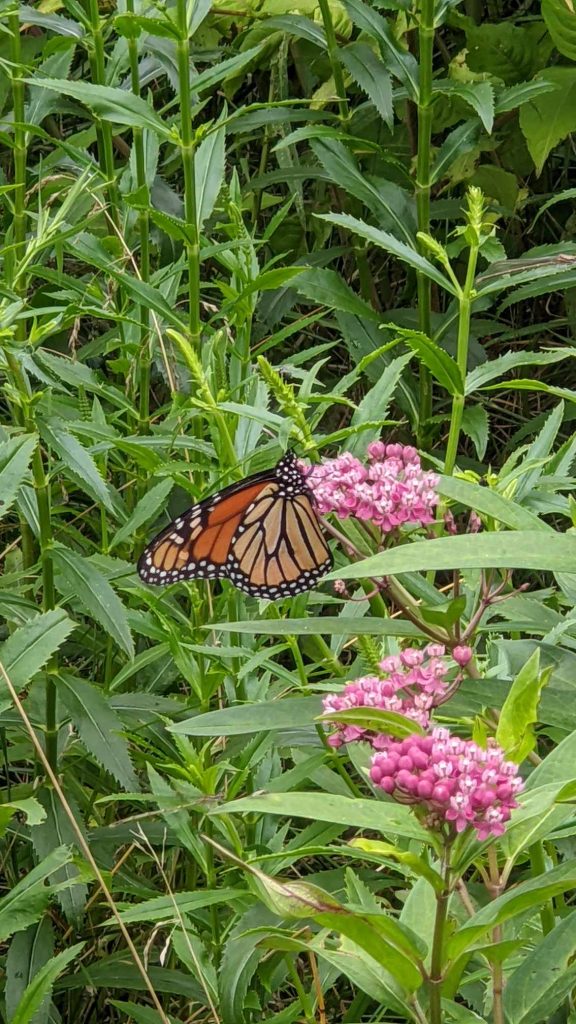
On the island of Montreal, some are birds like hummingbirds or mammals like bats, but the majority of pollinators are insects. There are over 400 species, including many bumblebees, native bees (which don’t live in hives), solitary wasps and a multitude of butterfly species such as the monarch butterfly. The list also includes species of flies (syrphid flies) and nectar-bearing beetles.
We are currently facing a global collapse in pollinator populations. In urban environments, the main causes of this decline are the lack of food and the destruction of their natural habitat. Planting flowers and creating pollinator gardens, whether large or small, high up or on the ground, helps to create biodiversity corridors for endangered foragers.
Flower, flower and more flower! You need everything, every smell and every color. The main causes of the decline in domesticated and wild bee populations (as well as other pollinators) are habitat degradation and lack of food. To prevent these adverse effects, there’s nothing better than planting a multitude of flowers.
To encourage pollinators, we favour plants that are :
That’s right! Even with a small balcony, you can make a difference by selecting plants according to the needs of pollinators. Small or large, high or low, you need to flower every possible space.
Ideally, plant native plants which are not only favoured by pollinators, but are also low-maintenance and well adapted to their environment. Among the long list of local flora is milkweed, the host plant of the monarch butterfly, of which there are a dozen species across Canada.